


Georg Jensen has sterling silver wheelbarrows, tea sets and lipstick cases in its bulging archive, but for creative director Paula Gerbase’s first jewellery collection for the famed Danish silversmith, inspiration came from a single piece of wire.
“I’ve been getting more acquainted with silver as a material,” says Brazil-born Gerbase – who joined the brand in November 2024 after moving from London to Copenhagen – and installed herself alongside the heritage label’s master silversmiths and apprentices to observe how the metal can be honed and manipulated into cutlery and candle holders, bracelets and bread baskets. “Looking at the 121 years of the brand, I started to see patterns in the humble use of a piece of wire, in filigree detailing on art nouveau belt buckles, on art deco pendants and earrings, in the necks of mid-century carafes by the artist Henning Koppel, which took weeks and weeks to make.” Gerbase also came upon a photograph of a sculpture crafted by Georg Jensen himself, which depicted a farmhand with an axe. The image was overgrown with trailing ivy, twisting like twine around the historic honed bronze.

The collection Weft features earrings, necklaces and bracelets that play with the concept of twisting lengths of silver wire, with pieces formed from varying widths of linked chain, connected together by one continuous length. “If that internal chain is released, the entire piece will disassemble,” Gerbase explains. The collection possess a woven quality – emblematic of the designer’s long career in fashion, which saw her train on Savile Row, take the creative reins at Sunspel and John Lobb, and, most recently, steer her second eponymous brand (1205 closed in 2016), which made meticulously honed second-skin plissé knits. “I have a certain fascination with the loom,” she says, smiling.
Gerbase’s understanding of the body – and the way impossibly soft cotton or springy technical nylon can interact with it – has also informed the way the bare skin of the wearer interacts with the pieces. “Over the last 20 or 30 years, Georg Jensen jewellery has had a real sculptural quality, but there is a stillness in it that feels monumental,” she says. “When you look at the brand’s much wider repertoire, from say 1904 to 1979, there was so much movement and playfulness to how things were attached to and moved with the body, like silver with a mobile quality, or hanging stones.” Of Weft, Gerbase explains, “It’s about intimacy and a level of transparency, the pieces come alive when they are worn.”

Gerbase calls out the dynamic jewellery of Vivianna Torun Bülow-Hübe, the first female silversmith to achieve global recognition in her field, who crafted bangle watches that intersected with the bare wrist, drop earrings dangling with smooth topaz beads, and a necklace crafted from abstract sterling silver leaves, suspending a chunky rock crystal pendant. She is just one of a cohort of revolutionary female artists who designed for Georg Jensen that feature in the brand’s “The Collector” series, which launched in April. This features reissued works from the ’40s to the late ’60s, by designers and artists including Bülow-Hübe, Nanna Ditzel (think: an 18-carat gold tapered disc brooch dangling with a pearl), Astrid Fog (cue: a sterling silver bangle formed from overlapping elliptical facets), and Anne Ammitzbøl (imagine: question mark-like ear cuffs).
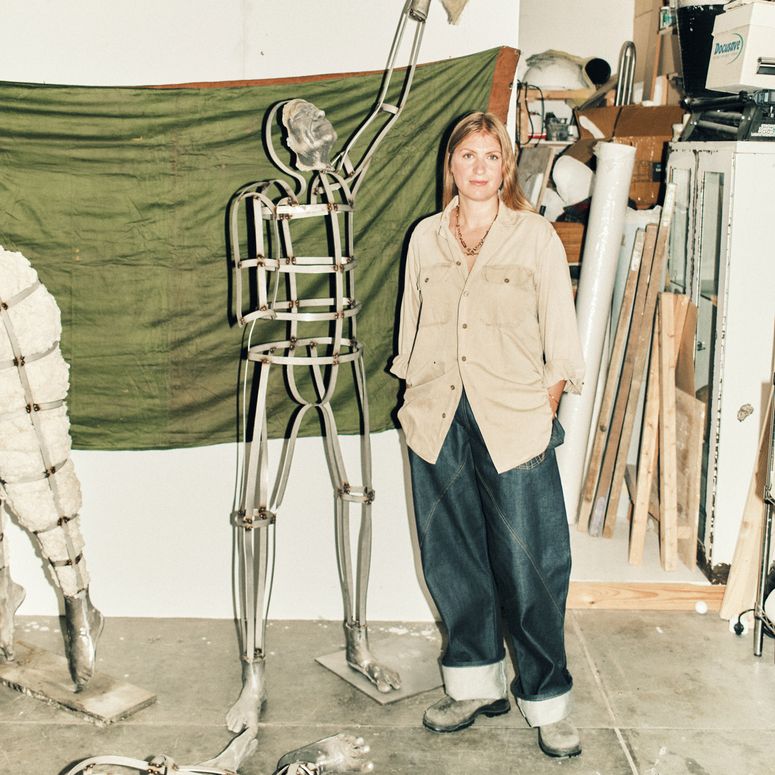
Georg Jensen was long curious about other makers and artists, inviting them into his bustling workshop or what Gerbase affectionately calls “the smithy”. Here, they had creative free reign, unbound by commercial expectations or production minimums. While she is passionate about the brand’s extensive archive – the meticulous design notes taken by silversmiths, the fragrance vials, the tea sets, the diligent sketches – she is keen to keep this spirit of cultivating burgeoning talent alive. “Innovation is a key part of my vision,” she explains. “It’s not just about referencing backwards.” In celebration of Weft, Gerbase has also curated an exhibition at Frieze No. 9 Cork Street in London’s Mayfair, showcasing six artists – Alison Wilding, Dan Coopey, Hellen Ascoli, Maiko Tsutsumi, Simone Griffin and 2026 Turner Prize nominee Kira Freije – that engage with materiality as part of their practice. The show will run until 16 May.

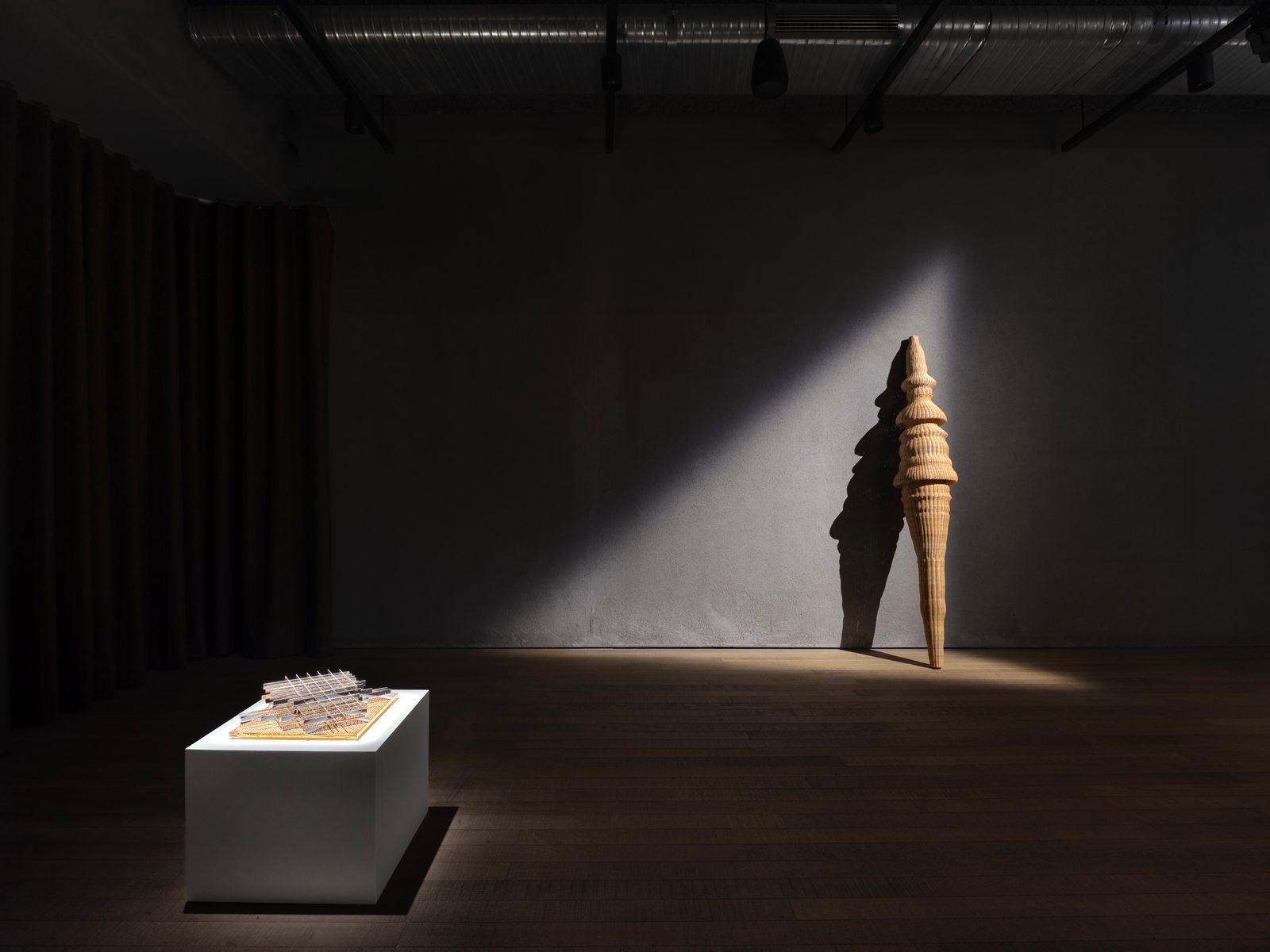
In 1951, Georg Jensen inaugurated The Lunning Prize, an award bestowed on two Scandinavian designers a year, to promote Nordic design. Recipients were invited to experiment in Jensen’s silver “smithy”, one of who included textile artist Kim Naver, who won in 1970 when the prize ceased, and whose work hangs in the brand’s Bond Street store in London. The exhibition is also conceived as a preview of a forthcoming Georg Jensen Contemporary Prize, slated for 2027, in a bid to continue support of the contemporary art scene. “Weft is all about links,” Gerbase says. “Georg Jensen itself can act as individual link to make a wider artistic connection.”