


Photo London returns from 14 to 17 May, with the festival’s 11th edition held across the Grade II-listed Olympia complex in Kensington.
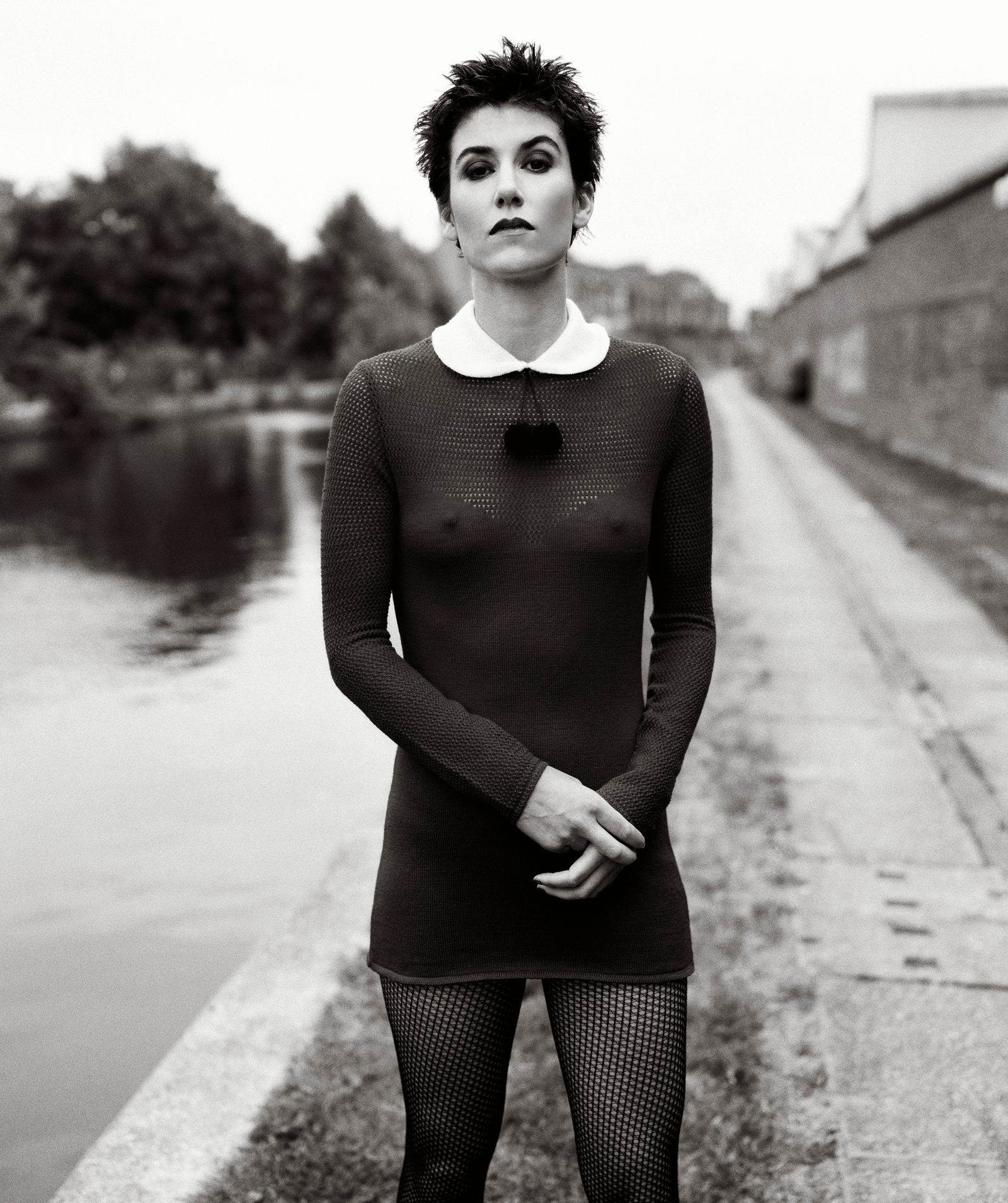
This year’s event marks the launch of Source, a trail of solo presentations with a focus on underrepresented subjects, from Ute Mahler’s fashion editorials among the Plattenbau towers of East Berlin to Jane Evelyn Atwood’s monochrome portraits of the trans community that flourished around the cabaret scene of ’70s Pigalle.
Elsewhere, Vogue contributor Charlotte Jansen returns as the curator of the Discovery section, a celebration of both emerging photographers and galleries. A particular highlight from the 2026 selection: Ibiza-based gallery Agony and Ecstasy’s display of Walter Rudolph and Oriol Maspons’s tanga-filled snapshots of the Balearic Islands before mass tourism reshaped the shores of Isla Blanca.
The fashion-inclined, though, should really start (and finish) with the main exhibitions: along with Autograph’s We Are The Ones We Have Been Waiting For – an homage to visionary women and nonbinary artists from Carrie Mae Weems to Zanele Muholi – this year’s Master of Photography slot has been given over to Steven Meisel, including prints of his zeitgeist-shifting London Girls editorial for the December 1993 issue of British Vogue.
Ahead of the festival, Hayley Maitland revisits the story behind Meisel’s first cover for the magazine, below.
There was change afoot in Vogue House over the cool, dry spring of 1986. After a three-year stint as creative director of Grace Mirabella’s American Vogue, a 36-year-old Anna Wintour, still years away from becoming a mononym, had just succeeded Beatrix Miller as editor in chief of the British edition of the magazine, and its pages were being transformed to better echo the preoccupations of the ’80s. As Anna told WWD a few months into her tenure, “I think what Vogue should reflect as far as women today is a certain activity and modernity. A zippiness, if you like. Women today have changed a lot, and Vogue has to reflect that.”
Her first issue, in August 1986, came emblazoned with the headline “Modern Britain!”, with a Janus-like raft of features that variously saluted Vogue’s past and signalled to the title – and the nation’s – future: a review of the Morgan Plus 8 by a pre-Ab Fab Joanna Lumley (“as eager as an under-exercised racehorse and goes like a bat out of hell”); a salute to the royal fashions of Norman Hartnell, Her Majesty Queen Elizabeth II’s preferred couturier, in honour of the house’s diamond jubilee; a profile of the BBC’s “firewoman” Kate Adie (just home from covering the Reagan administration’s bombing of Gaddafi’s Libya); and a fond salute to “Queen Bea”, who had been editor in chief for 22 years before her retirement. “When I told her I would like to honour her in this feature, she was appalled,” Anna wrote in her introduction to the tribute, as close to an editor’s letter as the August 1986 issue contains. “Her comment, I am sure, was characteristic – ‘It has absolutely nothing whatsoever to do with the magazine.’ I disagree.”
As respectful of Vogue’s heritage as the overall tone may have been, the discerning reader will have perceived nascent shifts within its fashion coverage, starting with “New Day at the London Collections”, an editorial devoted to the “British designers who best understand that modern dressing needs to be grown-up, chic and simple”. For the 10-page feature, Peter Lindbergh raced around the streets of London with a trio of models, their hair smoothed into pristine, wind-and-rain-proof updos by a young Sam McKnight. Picture Yasmin le Bon rushing past Portland-stone buildings in a Jasper Conran coat, or hailing a taxi in “the highest black suede heels” while clutching a bouquet of fresh tulips.
The resulting images were alive with a distinctly ’80s energy, imbued with a sense not just of glamour but ambition, too. Fittingly, this month also marked the launch of Frances Cairncross’s inaugural business column for British Vogue, which centred on “the power, the success, the money and the competition” that defined the decade’s careers – with a complementary shoot devoted to power tailoring, shot “in and on the new Lloyd’s that erupts on the east City skyline”.
The issue’s central feature, though, honed in on the question: “Who is the modern British beauty?” Inside the magazine, David Bailey, a Vogue veteran, captured two models by way of example: the “wildly pretty and boyishly nonchalant” Jeny Howorth, wearing a bowler hat by Stephen Jones over her bleached pixie, and Cecilia Chancellor, then in “incredible demand” among designers “from New York to Milan”, posing in a Victor Edelstein gown, its black velvet bodice giving way to a ballet-pink satin skirt.
It’s Steven Meisel, though, who made the photographic case for two British stars on the rise: actor Amanda Pays, then in the middle of shooting The Kindred, wrapped in a linen bathrobe by Paul Smith and “exuding the positive sensuality that looks great with the new crop of clothes”, and Sade, fresh from winning Best New Artist at the 1986 Grammys, whom Vogue hailed as “the shape of the new sophistication”. Still less established than Bailey, Meisel had contributed a few shopping-focused features to the pages of British Vogue, starting with “Cold Comfort” in November 1982, a More Dash Than Cash piece on budget clothes “proofed against the wind and wuthering” of British winters – but he’d never published a major editorial. For this issue, he delivered two – supplementing his contribution to “British Beauty” with a portfolio of Christy Turlington in the most elegant LBDs of the season. As Vogue put it: “Racy, curvaceous, bare and black, this is dressing for the cocktail, the theatre and the dinner hour.”
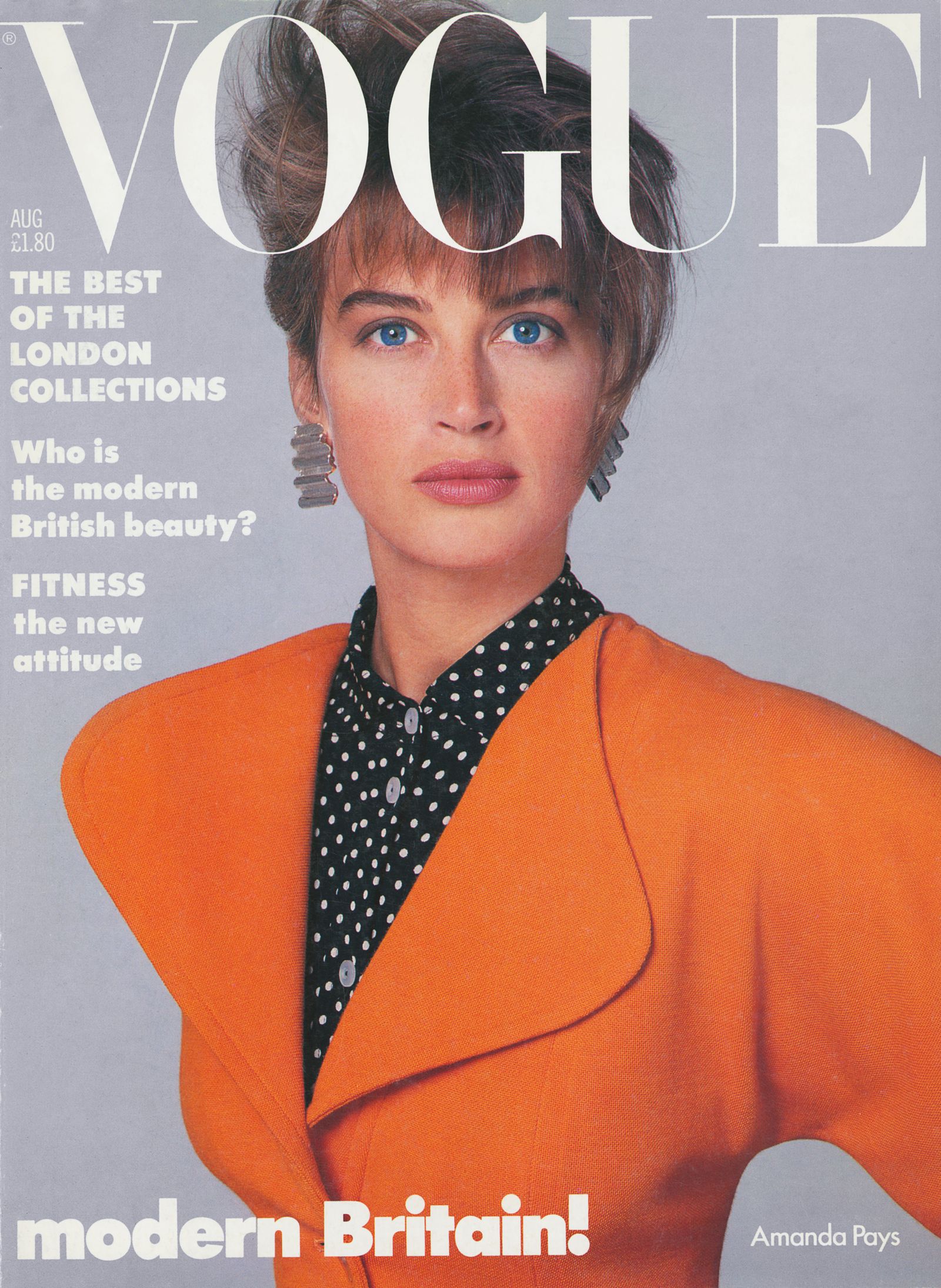
Ultimately, it’s Pays who ended up on the cover, having traded her bathrobe for a flaming-orange jersey coat over a monochrome polka-dotted shirt, both by Jean Muir. Grace Coddington, then British Vogue’s fashion director, worked with Meisel to shoot and reshoot the “coltish” 26-year-old actor in order to get the perfect image against a grey backdrop, while François Nars, still eight years away from launching his namesake brand, let the It-Brit’s “freckled summer tan glow through a light and pretty make-up from Revlon”. The resulting portrait would be Meisel’s first cover – not just of British Vogue, but of any edition of the magazine.
Before long, everyone with a hand in its creation would, in true ’80s fashion, have ascended to ever greater heights of fashion influence. By the following year, Coddington had decamped to New York to take up the role of design director at Calvin Klein, while Anna was appointed editor-in-chief of the American edition of House & Garden – though, already, there were reports that she would soon be at the helm of American Vogue. (As Bernard H Leser, president of Condé Nast Publications, told The New York Times in August 1987: “There have always been rumours regarding Anna. She’s an exciting person.”)
As for Meisel: in 1988, Franca Sozzani would be appointed as the editor in chief of Vogue Italia. Milan was calling.
Photo London runs from 14 to 17 May
Contributing research by Tabitha Blackburn
